
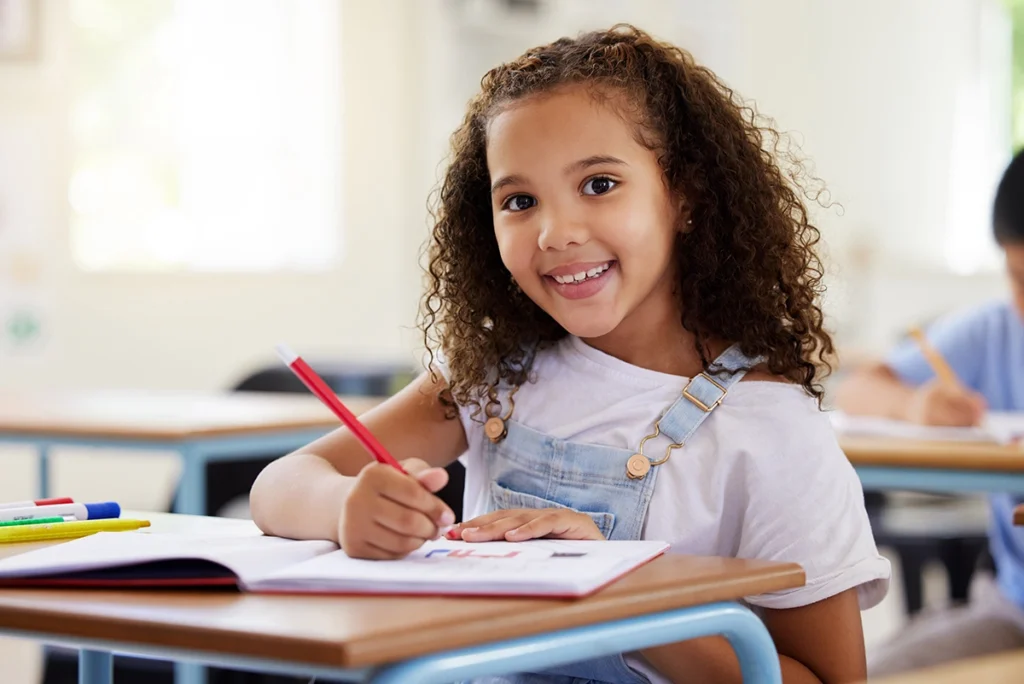
Learning Through Play: Why Children Remember Better When They Actively Engage
Learning does not have to mean sitting at a desk, reading the same information several times and then being tested on it.
Children can learn while sorting, searching, comparing, coloring, experimenting, solving a puzzle or trying to find an answer on their own.
Learning through play means combining information with active participation. Instead of only hearing or reading something new, the child uses it during a task, game, conversation or hands-on activity.
This does not mean that every game automatically teaches something.
What matters most is what the child does with the information.
They can find it.
Compare it.
Match it.
Apply it.
Explain it in their own words.
Or use it to solve a simple problem.
That is when play can become part of learning.
What is learning through play?
Learning through play is a way of developing knowledge and skills through activities that require children to take an active role. It can include games, puzzles, experiments, coloring, sorting, searching for information, movement and role play.
The key word is action.
Imagine two ways of learning flags.
In the first, an adult shows several flags and names the countries.
In the second, the child:
- receives several cards,
- finds the countries on a map,
- matches the flags,
- compares their colors,
- tries to recognise them again during a game.
The subject is the same.
But the child’s role changes.
In the first situation, they mainly receive information.
In the second, they have to do something with it.
That is one of the most important features of learning through play.
Why is listening alone often not enough?
Hearing information can be the beginning of learning, but children usually benefit from an opportunity to use that information. A question, task or activity helps them connect new knowledge with what they already know.
An adult can say:
“Japan is in Asia.”
The child may hear the sentence and forget it shortly afterwards.
But you can go one step further:
“Can you find Japan on the map?”
Then:
“Where is Asia?”
“Is Japan close to where we live?”
“What do you notice about its shape?”
The same information is now being used in several contexts.
Not every sentence needs to become an exercise.
But it is useful to regularly give children an opportunity to use what they have just discovered.
Why does active learning help children organise information?
An activity makes children notice details and relationships that are easy to miss during passive observation. Matching, sorting, comparing and searching all require conscious work with information.
Take flags.
If a child only looks at the French flag, they see three colors.
If they need to reproduce it, they have to notice:
- which colors are used,
- in what order,
- whether the stripes are vertical or horizontal.
If they compare it with the Italian flag, they need to find a difference.
If they later match it with the correct country, they use the information again.
The same approach can work with:
- maps,
- animals,
- letters,
- numbers,
- shapes,
- landmarks,
- words.
Children begin to notice features, similarities and differences, and the information becomes more organised.
Does learning through play mean there are no rules?
No. A good educational game can have a clear goal and clear rules. The difference is that the child reaches the goal through active participation rather than only receiving ready-made information.
For example:
“Find three countries in Europe.”
The goal is specific.
The child has to recognise the continent and locate the countries.
The activity still requires action.
The same applies to coloring a flag according to a reference, following the rules of a memory game or solving a riddle with one correct answer.
Learning through play is not complete freedom.
It is about balancing:
learning goal + activity + room for independent discovery.
Is every kind of play educational?
No. And it does not need to be. Play can exist simply for enjoyment, rest or creativity. Play becomes educational when it is deliberately connected with specific knowledge or a skill.
This distinction matters.
A child may color a picture simply because they enjoy coloring.
There is no need to ask every time:
“What did you learn from this?”
But if the material is meant to support geography learning, you can create a simple connection:
image → information → activity.
For example:
the child colors the Colosseum,
learns that it is in Rome,
finds Italy on the map.
Coloring remains enjoyable.
It also gains an educational context.
Does an educational activity need to be complicated?
No. A simple activity can be enough if it requires the child to use information. You do not need elaborate lesson plans or special educational sets.
Try:
“Find the country where we went on holiday.”
“Which flag belongs to Poland?”
“Which animal belongs with Australia?”
“Which is further from Poland: Spain or Japan?”
“Find two matching symbols.”
Each question may take less than a minute.
But the child is still:
- searching,
- comparing,
- remembering,
- deciding.
Learning through play does not have to mean an entire afternoon of planned educational activities.
It can happen in short everyday moments.
Why is curiosity more important than the number of facts?
When children begin asking their own questions, they stop being only recipients of information. Learning through play should leave room for curiosity, even when it takes the activity in a different direction than the adult originally planned.
Imagine you are exploring Australia.
The plan was simple:
map, flag and capital.
But the child notices a kangaroo and asks:
“Why do kangaroos live there?”
That question may lead to wildlife.
Then to other Australian animals.
Then to continents.
The plan has changed, but learning is still happening.
There is no need to force the activity back to the original list of facts.
If something genuinely interests the child, use that moment.
Curiosity can decide what comes next.
How should you ask questions that make children think?
The best questions do more than ask children to recall one name. They encourage observation, comparison, searching and explanation.
Instead of:
“What is the capital of France?”
you might ask:
“Do you remember which city we connected with the Eiffel Tower?”
Instead of:
“Is Japan in Asia?”
try:
“Find Japan and check which continent it is in.”
Instead of:
“This is a kangaroo.”
ask:
“Where in the world would we look for this animal?”
Useful questions often begin with:
- “How can we check?”
- “What do you notice?”
- “What is different?”
- “What is similar?”
- “Where could we find the answer?”
- “Why do you think that?”
- “What do you think will happen if…?”
The child does not need to know the answer already.
They can discover it while doing something.
Why can a wrong answer still be useful?
A mistake can become the beginning of further searching. If children are allowed to check and correct an answer themselves, the error becomes part of learning rather than simply the end of the task.
A child points to France instead of Spain.
You could say:
“No, that is France. Spain is here.”
But you could also say:
“Let’s check. Can you see France? Which country is just below it?”
The child looks at the map again.
They analyse the location.
They find Spain.
The mistake has led to another action.
If every incorrect answer is immediately replaced by the correct one, children lose the opportunity to work the solution out for themselves.
Does a child need to know that they are learning?
Not always. Learning can be a natural part of a game, conversation or shared activity and does not need to be labelled as “learning time”.
If you are planning an imaginary journey on a map, the child may be learning about:
- countries,
- distances,
- continents,
- directions.
There is no need to interrupt and say:
“See? You are learning geography.”
The same applies elsewhere.
Cooking can involve numbers and measurement.
A walk can involve identifying plants.
Building blocks can introduce shapes and comparisons.
Knowledge can appear inside an ordinary activity rather than beside it.
How can learning through play follow a child’s interests?
Start with a subject that already catches the child’s attention and then connect new information and activities to it.
If the child loves:
animals – explore habitats and world maps,
cars – explore countries, manufacturers and distances,
space – explore planets, scale and experiments,
cooking – use numbers, measurements and countries of origin,
drawing – explore maps, flags, landmarks and creative projects,
travel – explore countries, languages and cultures.
You do not need to make a child interested in “learning” first.
You can add learning to something they already enjoy.
How can educational activity books support learning through play?
An educational activity book can support learning through play when it does more than present text. It should encourage children to color, search, match, answer questions and work with maps or other information.
A country activity book might guide the child through:
- finding the country,
- discovering its flag,
- reading a short fact,
- coloring an illustration,
- solving a puzzle,
- checking the location on a map.
The same topic appears in several forms.
The book does not need dozens of activities.
What matters more is the connection between the information and what the child is asked to do with it.
Read also: “Educational Coloring Pages for Kids: How to Use Them for Learning.”
How can learning through play support exploring the world?
Exploring the world works especially well with active learning because almost any geographical fact can become a question, search task, comparison or puzzle.
Instead of saying:
“Italy is in Europe.”
ask:
“Find Italy and check which continent it is in.”
Instead of:
“The Japanese flag has a red circle.”
try:
“Find the Japanese flag among these four.”
Instead of:
“Paris is the capital of France.”
build a connection:
Eiffel Tower → Paris → France → Europe.
The child begins to form links between pieces of information.
Read also: “How to Teach Kids Geography Through Play: 10 Fun Ways to Explore the World.”
Which activities work best for learning through play?
The most valuable activities require children to do more than watch or listen. Searching, matching, comparing, sorting, solving problems and explaining ideas in their own words all require active use of information.
Different activities can be used depending on the subject.
1. Searching for information
Searching teaches children to use a source instead of waiting for a ready-made answer.
Instead of saying:
“Japan is in Asia.”
ask:
“Can you find Japan on the map?”
Or:
“Let’s check which continent it is in.”
Children can search using:
- maps,
- atlases,
- books,
- educational cards,
- prepared learning materials.
It does not need to be a long research task.
Sometimes thirty seconds is enough.
The important lesson is:
“I do not know yet, but I can find out.”
2. Matching
Matching helps children create connections between two pieces of information, such as a country and its flag or an animal and its habitat.
Children can match:
- flag → country,
- landmark → city,
- animal → continent,
- capital → country,
- word → picture,
- shape → location.
If they do not know the answer, they can use another resource.
Matching does not need to be a memory test.
It can also be an information-search activity.
3. Comparing
Comparing helps children notice similarities and differences and connect new information with what they already know.
Compare:
- two flags,
- two countries,
- two animals,
- two shapes,
- two words,
- two landscapes.
Ask:
“What is similar?”
“What is different?”
“Which country is closer?”
“Which flags use similar colors?”
“Which animals live in warmer climates?”
There does not always need to be one correct answer.
Sometimes observation itself is the main goal.
Why is sorting a useful educational activity?
Sorting requires children to identify a shared feature and decide which group an item belongs to. This helps organise information.
Try:
“Sort the countries by continent.”
“Put land animals here and water animals there.”
“Find all the flags that contain red.”
“Separate human-made landmarks from natural features.”
The child identifies the rule and applies it.
Older children can create their own categories.
For example:
“How else could we group these flags?”
This requires even more flexible thinking.
4. Memory and matching games
Memory games become more educational when the pairs represent a meaningful relationship rather than two identical pictures.
Create pairs such as:
flag → country
landmark → country
animal → continent
word → illustration
capital → country
After finding a pair, the child can optionally say one related fact.
For example:
“This is Japan. It is in Asia.”
This turns a standard memory game into a way of reinforcing the meaning behind each pair.
5. Riddles
Riddles require children to combine several clues and work out the answer.
For example:
I am in Europe.
My shape looks a little like a boot.
My capital is Rome.
Which country am I?
The answer is Italy.
If the child does not know, they can use a map.
Younger children can choose between several pictures.
Older children can work with more detailed clues.
Even better, let the child create a riddle for the adult.
They then need to decide which features actually describe the answer.
How can role play support learning?
Role play allows children to use knowledge in a situation that resembles a real task.
You can play:
- travel agency,
- tour guide,
- shop,
- restaurant,
- teacher,
- scientist,
- reporter.
For example:
The child runs a travel agency.
The adult says:
“I want to visit a European country where I can see the Colosseum.”
The child has to:
- identify Italy,
- find it on the map,
- say something about the country.
Another version:
The child becomes a guide to Japan and chooses three places or facts to present to the “tourists”.
The information is now being used in a more open context.
Why is it useful to let children teach adults?
Explaining something in their own words requires children to organise what they know. Switching roles can therefore be a simple way to see what they actually understand.
Instead of asking:
“What do you remember?”
try:
“I am not very good at maps. Can you show me where Europe is?”
Or:
“Imagine I have never heard of Japan. What should I know about it?”
The child can:
- use a map,
- draw,
- use an activity book,
- explain,
- create a short presentation.
Do not correct every small detail immediately.
First, see how the child organises the topic in their own way.
6. Creating their own materials
Creating something requires children to select information and transform it into a new form.
They can make:
- a country card,
- a map,
- a quiz,
- a mini book,
- a poster,
- a flag card,
- a guide,
- a board game.
After learning about Australia, for example, they could make one page containing:
Australia
- flag,
- capital,
- map,
- two animals,
- one interesting fact.
The final result does not need to be perfect.
What matters is that the child decides how to represent what they have learned.
How can movement be included in learning?
Movement can support learning when an answer or decision is linked to a physical action.
Place cards with continent names on the floor.
Say:
“Kangaroo.”
The child moves to Australia.
“France.”
The child moves to Europe.
You can use:
- numbers,
- letters,
- colors,
- flags,
- pictures.
Instead of pointing at an answer, the child moves to it.
This can work particularly well for children who do not enjoy sitting at a table for long periods.
Movement should support the activity rather than distract from its purpose.
How can experiments be used?
Experiments allow children to predict an outcome and then check what actually happens.
Simple experiments may involve:
- water,
- temperature,
- light,
- weight,
- plants,
- materials.
Before starting, ask:
“What do you think will happen?”
Then carry out the experiment.
Afterwards:
“Was the result what you expected?”
The child does not simply observe.
They first make a prediction.
Experiments are a large topic in their own right, so they do not need to be developed further here.
How can storytelling support learning?
Stories give information context and connect several elements into one sequence.
Instead of presenting:
“France – Paris – Eiffel Tower”
create a simple scenario:
“Imagine we have just arrived in Paris and want to find a famous landmark that can be seen from many parts of the city. What might it be?”
Then find France on the map.
The story can continue from there.
It does not need to become a long fictional adventure.
Sometimes a simple context is enough:
“You are an explorer and need to find…”
“We have lost our map and need to…”
“The travel agency has received a new request…”
The information becomes part of a situation rather than an isolated exercise.
How can offering choices help?
A limited choice gives children some control over the activity while keeping the learning goal clear.
Instead of:
“Today we are learning about France.”
try:
“Would you like to explore France, Japan or Australia today?”
Or:
“Would you rather start with the map or the coloring page?”
“Quiz or memory game?”
The adult still defines the options.
The child chooses how to begin.
Not every activity needs a choice, but it can be useful when learning is optional or informal.
How can children review information without rote memorisation?
Review does not need to mean repeating exactly the same task. The same information can be revisited through different activities and contexts.
For example, while learning about Japan:
Day one: find it on a map.
Day two: color the flag.
Day three: solve a riddle.
Day four: recognise Mount Fuji.
Day five: match Japan with the correct memory card.
The country appears several times, but the child does something different each time.
This allows repetition without constant testing.
Are rewards necessary in learning through play?
No. External rewards are not necessary for every educational activity. Solving a puzzle, completing a challenge or discovering an answer can be satisfying on its own.
Stickers, stamps and points can still be part of a game.
They do not need to be given for every correct answer.
For example, a stamp in an explorer passport can represent a country the child has discovered.
It becomes part of the story rather than payment for learning.
How long should an educational activity last?
There is no single correct length. The activity should continue while the child remains genuinely engaged and able to work with the topic without growing frustration or boredom.
One activity may last five minutes.
Another may develop into a half-hour project.
There is no reason to continue only because an adult prepared more material.
If interest drops, stop.
You can return another day.
There is no need to “finish the lesson”.
How can several activities be combined?
Different forms of activity can be combined when they all support the same learning goal.
For example, while exploring Italy:
- Search: find Italy on the map.
- Observe: notice its shape.
- Match: choose the correct flag.
- Color: reproduce the flag.
- Riddle: identify the capital.
- Create: draw a place you would like to see.
- Explain: tell an adult about Italy.
You do not need to complete all seven stages in one day.
They can become several short activities.
The important thing is that each one approaches the same topic from a different angle.
How can you tell whether a game really supports learning?
A useful educational activity gives children an opportunity to notice, use or explain information. An attractive design or an “educational” label is not enough on its own.
Ask three questions:
1. What is the child supposed to learn or discover?
If there is no clear answer, the goal may be too vague.
2. What does the child do with the information?
Do they only see it?
Or do they search, match, compare, apply or explain it?
3. Is the activity appropriate for their abilities?
Even a well-designed activity will not work if it is far too easy or too difficult.
Not every game needs to meet these criteria.
But if something is described as educational play, the learning should actually come from what the child is doing.
How should learning through play be adapted to age?
A good educational activity should match the child’s abilities. Younger children usually need short instructions, larger elements and simple tasks, while older children can compare, research and draw conclusions more independently.
Age is only a guide.
A better question is whether the child understands the task, can complete it and remains interested.
A general progression may look like this:
| Stage | Examples of learning through play |
|---|---|
| First activities | picture matching, colors, large elements, simple questions |
| Next stage | memory games, searching, simple maps, riddles, sorting |
| More independence | quizzes, comparisons, creating materials, map work |
| Older children | research, projects, reasoning, more complex games |
There is no need to constantly increase difficulty.
If a child enjoys a simple game, reuse it with a new topic or add one new rule.
How can you tell if an activity is too easy or too difficult?
A well-matched activity requires some effort but still gives the child a realistic chance of finding the answer independently.
If everything is automatic, make it slightly harder.
Instead of:
“Find Poland.”
try:
“Find the European country whose capital is Warsaw.”
If the child does not know where to begin, simplify the task.
Instead of:
“Find every country that borders Germany.”
try:
“Find Germany. Now which country is directly to the east?”
A good activity should create opportunities for independent success, not constant adult prompting.
Is learning through play only for young children?
No. Active learning remains useful beyond the preschool years. What changes is the complexity of the activity.
A younger child can match a flag with a country.
An older child can:
- compare several flags,
- identify similarities,
- explain differences,
- research their symbolism.
A younger child can find Australia on a map.
An older child can compare its location, climate and distance from Europe.
The basic pattern remains:
information → activity → use of knowledge.
Projects, experiments, quizzes and independent research can therefore also work with older children.
Can learning through play support school learning?
Yes. Educational games can help children review and organise school material by using the same knowledge in a different context.
If the child is learning European countries at school, at home they can:
- arrange flags,
- find countries on a map,
- solve riddles,
- make a memory game,
- create their own quiz.
If they are learning vocabulary, use matching cards.
If they are working with numbers, add movement or practical tasks.
The aim is not to replace school.
It is to create another context for the same knowledge.
What mistakes should you avoid?
Common mistakes include trying to teach too many things at once, controlling the activity too closely, using tasks that are too difficult and turning every game into a test.
Do not teach everything at once
One activity does not need to combine geography, reading, maths, memory and language learning.
Choose one main goal.
For example:
goal: find a country on a map
Other skills can appear naturally, but they do not all need to become formal objectives.
Do not correct every mistake immediately
If the child makes an error, first give them a chance to check it.
“How can we verify that?”
“Look at the map again.”
“Could there be another answer?”
The mistake becomes part of the next step.
Do not turn every activity into a quiz
If every page ends with:
“What do you remember?”
“What was the capital?”
“What colors were on the flag?”
the activity can quickly begin to feel like a test.
Sometimes children should simply be allowed to do the activity.
Do not continue after interest is gone
If the child is bored, there is no need to finish everything the adult prepared.
Come back later.
Engagement matters more than the number of completed pages.
Does an educational activity need a visible result?
No. A useful activity does not always end with a completed worksheet, finished drawing or perfect quiz score. Sometimes the most valuable result is a question, conversation or independently discovered answer.
A child may start by coloring Japan.
Then ask:
“Why is Japan made up of islands?”
And stop coloring.
That does not mean the activity failed.
It created a new question.
That curiosity can be a valuable outcome in itself.
How can you recognise a good educational game?
A good educational game has a clear purpose, requires active participation and matches the child’s abilities. It does not need to be complicated or look like schoolwork.
Check whether:
- the subject is clear,
- the child needs to do something with the information,
- the difficulty is appropriate,
- the task allows independent thinking,
- constant correction is unnecessary,
- the activity does not overload attention.
A useful question is:
“Is the child only looking, or are they actually working with the information?”
If they need to find, match, compare, explain or apply something, the activity has a clear educational component.
How should you choose learning-through-play materials?
The best materials combine simple content with a clear activity and avoid overwhelming children with too many elements.
Look for:
- clear instructions,
- accurate information,
- illustrations connected with the subject,
- appropriate difficulty,
- opportunities for active participation,
- limited amounts of text.
A resource does not need dozens of exercises.
Sometimes one map, several cards and a good question can offer more opportunities than an elaborate set a child does not want to use.
How can educational activity books support active learning?
A well-designed educational activity book does more than present information. It encourages children to complete tasks, color, search, compare and revisit earlier content.
A possible structure is:
- discover the country,
- find it on a map,
- explore its flag,
- read a short fact,
- complete an activity,
- color,
- solve a puzzle,
- return to the map.
Each stage uses the subject in a slightly different way.
The child does not simply browse the material.
They actively work with it.
10 key principles of learning through play
Learning through play works best when children have a clear goal while still being able to search, check and make decisions independently.
- Connect information with action.
- Introduce only a few new ideas at a time.
- Ask questions that require searching.
- Let children make mistakes.
- Use their existing interests.
- Revisit information in different forms.
- Match the difficulty to the child.
- Do not turn play into a test.
- Leave room for the child’s own questions.
- Stop before the activity becomes an obligation.
Not every minute of play needs to be educational.
The important thing is that when we do want to teach something, the child has an opportunity to do something with the knowledge.
Frequently Asked Questions
What is learning through play?
Learning through play means developing knowledge or skills through active participation. Children may search, match, compare, solve puzzles, experiment, create or explain information.
Is learning through play effective?
It can support learning when children do more than receive information and are encouraged to use it during a task, game or conversation.
Does every game teach something?
No. And it does not need to. Play can simply be enjoyable. It becomes educational when an activity is deliberately connected with specific knowledge or skills.
How can I teach my child through play?
Turn ready-made information into a task. Instead of telling a child where a country is, ask them to find it. Instead of showing the correct flag, let them choose it from several options.
What are the best educational activities?
Useful activities include searching, matching, comparing, sorting, solving problems and explaining information in the child’s own words.
Is learning through play suitable for older children?
Yes. The activities simply become more complex. Older children can complete projects, quizzes, experiments and tasks that require independent research.
Do children need rewards for educational games?
No. Rewards can be part of a game, but they are not necessary. Solving a problem or discovering an answer can be satisfying on its own.
How long should an educational activity last?
As long as the child remains engaged. A short five-minute activity can be just as useful as a longer project.
Are educational activity books a form of learning through play?
They can be, especially when children need to color, search, match, solve puzzles or work with maps rather than only read information.
How can I encourage my child to learn without forcing them?
Start with subjects they already enjoy and offer choices in how to explore them. Animals, maps, drawing, travel and experiments can all become starting points for learning.
Summary
Learning through play is not about hiding a school lesson behind colorful graphics.
Its most important feature is the child’s active role.
Instead of only receiving information, children:
search,
compare,
match,
check,
create,
ask questions,
explain.
Knowledge becomes something they can use.
This does not require complicated resources or long activities.
Sometimes all you need is a map, a few cards and one good question:
“How can we find the answer?”
Turn exploring the world into active play.
Our educational country activity books combine interesting facts with coloring, activities and discovery, helping children actively work with what they learn instead of only reading about it.