
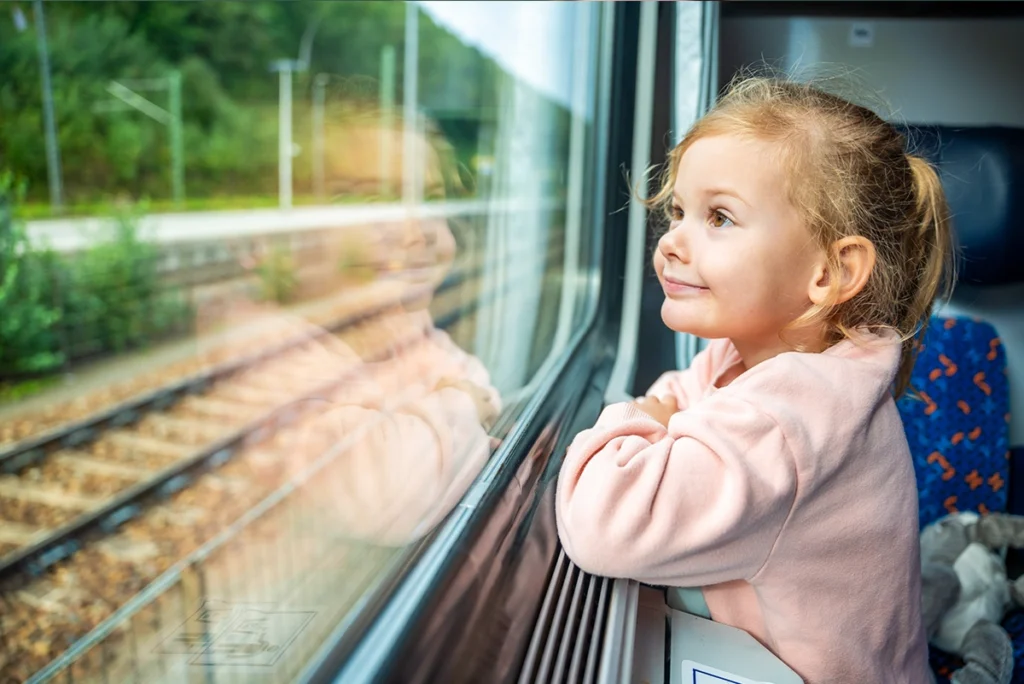
How to Get Your Child Interested in Travel and Exploring the World
Not every child is immediately excited by maps, airports or the idea of visiting a new country.
For one child, travel means adventure.
For another, it means a change of routine, a long journey, unfamiliar food and situations they do not yet understand.
That is why interest in travel should not be forced.
The best way to encourage curiosity about the world is to build it gradually through maps, stories, pictures, food, languages, the child’s own choices and experiences that feel meaningful to them.
A journey does not have to begin at the airport.
It can begin with one question:
“Where is that?”
Is every child naturally interested in travel?
No. Curiosity about the world can take many different forms. One child may love countries and flags, while another is more interested in animals, food, languages or specific places. Any of these interests can become a starting point for travel.
You do not need to expect:
“Wow, we’re going to Spain!”
A child may care more about:
- the hotel pool,
- the aeroplane,
- local animals,
- ice cream,
- the beach,
- trains,
- one particular landmark.
That still gives you something to work with.
You can build on it:
“If you like that train, let’s see where it can take us.”
“You like those animals? Let’s find out where they live.”
“You want to see that castle? Let’s find the country on a map.”
You do not always need to start with geography.
You can reach geography through the child’s existing interests.
How can you encourage curiosity about the world without travelling?
Children can become interested in the world without leaving home. A map, book, photograph, film, piece of music, dish or interesting fact can all start a conversation about another place.
For example, while eating pizza, ask:
“Which country is pizza most strongly associated with?”
Then find Italy on the map.
Another day:
“Where is Japan, the country sushi comes from?”
There is no need to organise a formal “country lesson”.
Use situations that already happen naturally.
Why can maps make children more interested in travel?
A map shows children that places from books, films and stories really exist and are connected within one world. It allows them to see where they are going and how that destination relates to home.
Before a trip, find:
- the country,
- the city,
- the sea or ocean,
- neighbouring countries,
- the route.
Simple questions are enough:
“Where are we now?”
“Where are we going?”
“Which country is on the way?”
“Is it far?”
The child begins to understand that every journey has a real starting point and destination.
Read also: “How to Teach Kids to Read a World Map: Fun Map Activities Without Memorising.”
How can you give a child more choice during travel?
Children are often more engaged when they have some influence over what they discover.
They do not need to plan the entire trip.
They can choose:
- one attraction,
- a food to try,
- a place for a walk,
- a fact to investigate,
- a symbol to look for,
- a small souvenir.
Try:
“Would you rather see the castle or the park?”
“Do you want to discover something about food or animals?”
“Which place should we mark on the map?”
A small choice can help the child feel less like a passenger and more like a participant.
How can you introduce a new country before a trip?
A few basic pieces of information are enough to create the first connections: where the country is, what its flag looks like, which place you will visit and what the child can expect to see.
You do not need a presentation.
Simply:
- find the country on a map,
- look at the flag,
- view one or two photographs,
- learn one simple word,
- choose one thing you would like to see.
The child now has a point of reference.
When you arrive, they may say:
“That is the building we looked at!”
Recognition can increase engagement.
Should children learn a few words before travelling?
Yes. A few simple words can make a destination feel more interesting and show children that people communicate in different ways around the world.
Try:
- hello,
- thank you,
- please,
- goodbye.
This is not about formal language learning.
It is simply an introduction to another language and culture.
How can food make children more interested in travel?
Food gives children a concrete experience they can connect with a country. You can try a dish before travelling and later compare it with what you encounter at the destination.
Before going to Italy, prepare a simple Italian dish.
Before visiting Spain, try a typical snack.
The aim is not to reduce a culture to food.
The dish is simply a starting point.
How can photographs and videos help?
Photographs and short videos help children form an initial picture of a place before they see it in real life.
Show:
- a landscape,
- one street,
- a distinctive building,
- local transport,
- wildlife.
There is no need for a long documentary.
A few clear images can be enough.
Then, during the trip, the child may experience a powerful moment of recognition:
“I’ve seen this before!”
How can educational activity books be used before a trip?
An educational activity book can help a child become familiar with a country before travelling, especially when it combines maps, illustrations, short facts and activities.
The child can:
- color the flag,
- find the country,
- learn the capital,
- discover a famous place,
- solve a puzzle.
When you arrive, some of those ideas become real.
The book does not replace travel.
But it means the child arrives with their first connections already in place.
What if a child does not want to learn about the destination before travelling?
Do not force it. Leave the subject open and return to it when a natural opportunity appears.
If they do not want to look at a map, there is no reason to make it compulsory.
Interest may appear:
- at the airport,
- on the train,
- after seeing a flag,
- during the first meal,
- while walking through the city.
Curiosity does not always appear before the journey.
Sometimes the destination itself creates it.
How can you avoid turning travel into a lesson?
Travel should not become a continuous knowledge test. Learning works best in the background as a natural part of discovering a place together.
Instead of:
“Do you remember the capital?”
try:
“Look, we’re in the city we found on the map.”
Instead of:
“What is this landmark called?”
say:
“This is the place we saw in your activity book.”
Not every attraction needs to lead to a quiz.
Children can simply look, experience and remember.
Why are real experiences so valuable?
A place a child has seen, heard and experienced gains a completely different meaning from a name read on a page.
After a trip, the word:
“Barcelona”
is no longer only a name.
It may represent:
- a street,
- a taste,
- the weather,
- a building,
- an event,
- a memory.
Those associations create natural material for further learning.
How can you use a trip after returning home?
After a trip, revisit the experience and connect it with the map again. This helps the journey continue as a learning experience after you return.
You can:
- mark the place on a map,
- add a photograph,
- draw a favourite place,
- add the flag,
- create a page called “Our Trip”.
It does not need to become a large project.
One page is enough.
Do you need to travel far to make children curious about the world?
No. Curiosity can grow during short trips within your own country, visits to another city, parks, museums or different regions.
Children can learn to:
- follow a route,
- compare towns,
- notice changes in landscape,
- understand distances,
- recognise regions.
Travel does not need to mean flying to the other side of the world.
The key experience is:
“I am somewhere different from usual. What is different here?”
10 ways to get children interested in travel
The most effective travel activities give children their own role in discovering a place. They can choose, search, mark, photograph, collect memories and explain what they have seen.
The trip itself already provides plenty of learning material.
You only need to help the child notice it.
1. Create a travel passport
A travel passport can turn each destination into one stage of a larger adventure and help children record their discoveries.
Use a notebook or a few prepared pages.
For each place, include space for:
- country,
- flag,
- city,
- date,
- drawing,
- sticker or “stamp”,
- one thing the child remembers.
It works for domestic travel too.
Instead of countries, you can record:
- cities,
- regions,
- mountains,
- the coast,
- national parks.
The child creates their own collection of places rather than simply accompanying adults.
2. Mark your journeys on a map
A travel map shows that every place you visit has a location and that family journeys gradually create a network of memories.
Use simple symbols:
★ visited
♥ favourite
? want to visit
Before the trip:
“This is where we’re going.”
After:
“This is where we’ve been.”
You can add a small photograph or symbol.
Over time, the map becomes both a geography resource and a map of family experiences.
3. Let the child choose one attraction
Even a small amount of control can make a child more interested because they have their own goal for the trip.
Offer two or three possibilities:
“Castle, aquarium or park?”
“Cable car or viewpoint?”
“Which place should be yours?”
Older children can research and choose one attraction themselves.
4. Play “find it in real life”
Before travelling, choose a few things the child should look for at the destination. Recognising them in real life creates a strong link between preparation and experience.
Use pictures of:
- the flag,
- a landmark,
- local transport,
- a plant,
- an animal,
- a city symbol.
Three or four items are enough.
It can become a simple bingo game.
5. Collect words from each trip
A few local words can become part of the child’s travel collection and introduce the linguistic diversity of the world.
For example:
WORDS FROM SPAIN
hola – hello
gracias – thank you
Or:
WORDS FROM ITALY
ciao
grazie
There is no need to learn dozens of phrases.
A few words the child may actually hear are enough.
How can you make travel bingo?
Travel bingo turns observation into a simple game and encourages children to notice distinctive features of a destination.
Add things such as:
- a flag,
- local transport,
- a landmark,
- writing in another language,
- a particular plant,
- a fountain,
- a monument,
- the sea,
- a mountain.
Create different boards for cities, the coast or the mountains.
You can play cooperatively and try to complete the board together.
6. Let children take their own photographs
Photos taken by children reveal what they themselves found interesting and can later become starting points for conversations about the trip.
They may photograph:
- a strange sign,
- a dog,
- colorful doors,
- a tram,
- food,
- a tree,
- the sea.
Afterwards ask:
“Why did you take this picture?”
Their most memorable discovery may be completely different from the adult’s.
7. Create a collection of travel symbols
Instead of buying many souvenirs, collect a few small items connected with each destination.
These might include:
- tickets,
- postcards,
- maps,
- stickers,
- leaflets,
- a drawn flag,
- a photograph.
After returning home, place them in a folder or travel notebook.
You do not need to keep everything.
Choose items that help recall the place.
8. Let the child become the tour guide
Switching roles allows children to use what they discovered and explain it in their own words.
Say:
“Today you’re our guide. What do you know about this place?”
One sentence is enough.
Older children can choose one attraction and prepare three facts beforehand.
Let them explain first.
You can check details together afterwards.
How can children create their own mini travel guide?
A personal guide helps children organise what they know and decide what they themselves want to see.
It can fit on one page:
We’re Going to Rome
Country: Italy
Flag: …
I want to see: …
I want to try: …
Interesting fact: …
On the map: …
Younger children can draw.
Older children can write.
It is not a logistical itinerary.
It is the destination through the child’s eyes.
9. Create a travel mission
One simple mission can encourage observation without turning the whole trip into a worksheet.
For example:
“Find three flags.”
“Find the strangest building.”
“Listen for one word you don’t know.”
“Find the best view.”
“Take a photo of something we don’t have at home.”
Older children can invent their own missions.
10. Let the child review the destination in their own way
After travelling, ask about personal experiences rather than testing whether the child remembers the most important attractions.
Try:
“What did you like most?”
“What was the strangest thing?”
“What looked completely different from home?”
“Where would you like to go again?”
“What wouldn’t you want to do again?”
The answer may be:
“The ice cream was the best.”
That is completely fine.
The ice cream may later lead to:
“That was in Rome.”
And Rome:
“That is in Italy.”
Children’s memories do not need to follow an adult’s educational priorities.
How can children explore the world without leaving home?
Travelling is not required to explore the world. Maps, books, food, music, films, photographs and educational activities can all help children discover countries from home.
Create an imaginary journey.
The child chooses a country.
Then:
- find it on a map,
- discover its flag,
- choose one place,
- learn one word,
- discover one fact,
- complete a coloring page or activity.
Finish by adding a stamp to an explorer passport.
Today Japan.
Next week the USA.
Then Poland.
The world can be explored through real travel and through intentional discovery at home.
Is virtual travel useful?
Virtual maps, panoramic images and videos can help children see places they cannot currently visit. They work best as a supplement rather than a replacement for real experiences.
You can:
- look at a street in Tokyo,
- explore a museum,
- visit a landmark virtually,
- see a landscape from another part of the world.
Then return to the map.
“Where were we just looking?”
The image becomes connected with a location.
How can you interest a child in a destination they did not choose?
You do not need to convince them that the destination is amazing. Find one element that matches something they already enjoy.
If they dislike monuments, perhaps they will enjoy:
- local transport,
- food,
- a park,
- animals,
- a stadium,
- a shop,
- a viewpoint.
Children do not need to enjoy destinations for the same reasons adults do.
Find their own point of connection.
What if a child gets bored while sightseeing?
A sightseeing schedule designed entirely for adults can simply be tiring for children. Mix sightseeing with opportunities to move, choose and rest.
Instead of:
museum → church → monument → museum,
try:
landmark → park → food → walk → attraction.
This does not mean adults must give up everything they want to see.
It means planning for different needs.
Does every family trip need to be educational?
No. A family holiday does not have to become an educational project. Rest, play and shared experiences are enough reasons to travel.
You do not need daily:
- quizzes,
- worksheets,
- landmarks,
- map activities.
Sometimes the best day is simply a day on the beach.
And later the child may ask:
“What sea is this?”
Then the map appears naturally.
How can a child’s existing interests be used while travelling?
New places become easier to explore when they are connected with something the child already loves.
If they like:
animals – explore local wildlife,
football – look for stadiums and clubs,
trains – explore local transport,
food – try new dishes,
drawing – sketch interesting buildings,
history – visit castles and historical places,
the sea – explore islands, ports and marine life.
Travel becomes an extension of an existing interest.
How can you preserve travel memories?
Choose a simple format the child will actually want to revisit. It does not need to be an elaborate scrapbook.
Try:
- one photograph,
- one notebook page,
- a drawing,
- a flag,
- a ticket,
- a sticker on the map.
After a year, those pages tell the story not only of:
where you went,
but also:
what mattered to the child in each place.
How can a trip lead to further learning?
After returning home, continue only with the topics that genuinely caught the child’s attention.
If they loved volcanoes – explore volcanoes.
If they became interested in the language – learn a few more words.
If they started asking about flags – explore flags.
If they loved the metro map – compare maps from other cities.
A trip does not need to close a topic.
It can reveal what the child wants to discover next.
How should exploring the world be adapted to age?
The approach should depend more on the child’s abilities and interests than on strict age boundaries. Younger children benefit from concrete experiences, while older children can participate more actively in planning and research.
A general progression might look like this:
| Stage | What may interest the child? | How to involve them |
|---|---|---|
| First discoveries | colors, animals, transport, food | pictures, pointing, simple activities |
| More independence | flags, countries, landmarks | maps, bingo, explorer passport |
| Developing knowledge | cities, languages, cultures, nature | quizzes, facts, personal notes |
| Older children | history, cultural differences, planning | research and choosing attractions |
These are only guidelines.
Interest matters more than age.
How can you get younger children interested in travel?
Start with things they can see, point to, color or find. Abstract information about history and geography can come later.
Before travelling, show:
- the flag,
- a picture,
- an animal,
- a simple map,
- the transport you will use.
At the destination:
“Can you find the flag?”
“Can you see the building from the picture?”
“Where is the sea?”
After returning:
“Can you draw the place you remember most?”
That may be enough.
How can you get older children interested in travel?
Older children can gradually take more responsibility for discovering a destination by researching, comparing options, reading maps and making small planning decisions.
Ask:
“Find three places worth seeing.”
“Check how we can get from the hotel to the centre.”
“Find something we don’t know about this country.”
“Which attraction would you choose?”
The aim is not to make the child organise the holiday.
It is to show:
“Your decisions matter too.”
Is it worth introducing the destination before the trip?
Yes, as long as the preparation creates curiosity rather than becoming something to memorise. A few early associations can help children recognise places and symbols later.
Find the country.
Look at the flag.
Choose one place.
Discover one fact.
That is already enough.
How much information should children receive before a trip?
A few pieces of information they are likely to see or use are more valuable than a long list of country facts.
A simple set might include:
- where you are going,
- the flag,
- the city,
- one landmark,
- one local word,
- one interesting fact.
Everything else can be discovered during the trip.
Should children see pictures of attractions before travelling?
Yes. Showing a few places can help them choose what interests them and creates a satisfying moment of recognition during the trip.
Do not show every detail of the holiday in advance.
Leave some room for surprise.
Show three options and ask:
“Which one would you most like to see?”
Does a country activity book make sense without an upcoming trip?
Yes. Children do not need to be travelling somewhere to enjoy learning about it. An activity book can become an educational journey from home.
A child may choose Japan because they like:
- sushi,
- trains,
- anime,
- Mount Fuji,
- Japanese.
That is enough.
From there they may also discover:
- location,
- flag,
- capital,
- wildlife,
- culture.
You do not have to visit a country for it to be worth exploring.
Is learning about the world without travelling valuable?
Yes. Travel is one way to explore the world, but not the only one. Children can develop knowledge about countries and cultures through maps, books, conversation, films, music and educational activities.
This matters because travelling to many countries is not possible for every family.
Curiosity about the world should not depend on the number of flights a child has taken.
You can discover Japan without going to Tokyo.
You can become interested in Australia without seeing Sydney.
You can explore South America from your own kitchen table.
Real travel offers experiences that cannot be fully recreated at home.
But knowledge and curiosity do not require an airline ticket.
How should you talk to children about differences between countries?
Present differences as a natural part of the world rather than describing other customs as “normal” or “strange”.
Instead of:
“They eat in such a strange way here.”
try:
“A different way of eating is common here.”
Ask:
“What looks similar to home?”
“What is different?”
Difference does not automatically mean better or worse.
How can you talk about other cultures without reinforcing stereotypes?
Use specific examples and avoid describing an entire society through one characteristic.
Statements such as:
“Japanese people are…”
“Spanish people always…”
“All Italians…”
are too broad.
Prefer:
“In Japan, you may see…”
“One tradition is…”
“In some regions…”
Countries contain people with different:
- traditions,
- languages,
- foods,
- lifestyles,
- experiences.
Exploring the world should help children notice that diversity.
What if a child compares everything with home?
Comparing new places with familiar ones is a natural way of organising information. Use those comparisons rather than discouraging them.
Ask:
“What looks similar to our town?”
“What looks different?”
“Is the weather the same?”
“How do people travel around?”
“What are the shops like?”
Familiar experiences become useful reference points.
Should every incorrect assumption be corrected immediately?
Not always. If an idea is not harmful or reinforcing a stereotype, first ask why the child thinks that way.
A child says:
“Everyone in Japan eats sushi.”
Instead of only:
“No.”
try:
“Sushi does come from Japan, but do you think people there eat only one kind of food?”
Now there is another question to explore.
What if you do not know the answer to a child’s question?
You do not need to know everything. Looking something up together can be just as valuable as giving an immediate answer.
Say:
“I don’t know. Let’s find out.”
Children then see that adults also encounter questions they cannot answer immediately and can use reliable sources to investigate.
What if a child has no interest in travelling?
Do not try to force an interest in travel itself. Start with something they already enjoy and connect it with places around the world.
If they love dinosaurs – explore fossil sites.
If they love space – observatories and science centres.
If they love football – clubs and cities.
If they love animals – habitats.
Start with the interest.
Then geography can follow.
Can a child simply dislike travelling?
Yes. Not every child enjoys changes of environment, long journeys, crowds or intensive sightseeing. Disliking travel does not mean lacking curiosity about the world.
A child may love:
- maps,
- flags,
- world animals,
- languages,
- books about countries,
while disliking long journeys.
These are separate things.
A child can be curious about the world without wanting to travel constantly.
What mistakes should you avoid when encouraging children to travel?
The most common mistake is expecting children to be interested in the same things as adults and turning the journey into a compulsory geography lesson.
Avoid:
- too many attractions,
- constant testing,
- correcting everything,
- forcing adult interests,
- comparing the child with others,
- expecting visible excitement,
- planning every minute,
- reducing countries to stereotypes.
A child does not have to be amazed by the Louvre, the Colosseum or Sagrada Família simply because adults consider them important.
They may remember something completely different.
Do rewards help children become interested in travel?
A reward may encourage a child to complete a particular task, but it does not necessarily create genuine curiosity about a place. Discovery itself can be the goal.
Instead of:
“If you finish this quiz, you’ll get a prize,”
try:
“Can we find all three things on our map?”
The mission itself becomes part of the experience.
How can you keep curiosity alive after a trip?
Return to whatever the child genuinely found interesting during the journey.
If they loved a castle – discover other castles.
If they loved the metro – look at metro maps in other cities.
If they noticed the language – learn more words.
If they became interested in the flag – explore neighbouring countries’ flags.
If they loved an animal – find out where else it lives.
Travel becomes a starting point rather than an isolated event.
How can travel support geography learning?
The most natural connection happens when geographical knowledge helps children understand their own experience.
After travelling, find:
- the country,
- the city,
- the continent,
- the sea or ocean,
- neighbouring countries.
You can also trace the route:
home → airport → country → city.
The child can finally see where they actually went.
Read also: “How to Teach Kids Geography Through Play.”
10 rules for developing curiosity about the world
You cannot force an interest in travel, but you can create opportunities for children to discover new places in ways that matter to them.
- Start with the child’s interests.
- Use maps.
- Introduce only a few facts at a time.
- Give the child small choices.
- Connect knowledge with real experiences.
- Do not turn every trip into a lesson.
- Present cultural differences without judgement.
- Encourage questions.
- Search for answers together.
- Return to discoveries after the trip.
The goal is not to raise a child who knows every capital.
A more valuable idea is:
“The world is large, and there is still so much I don’t know.”
Frequently Asked Questions
How can I get my child interested in travel?
Start with something the child already enjoys and connect it with a place. Maps, photographs, interesting facts, choosing an attraction and simple travel missions can all help.
What if my child does not want to travel?
Do not force enthusiasm. Try to understand what part of travel they dislike and separate physical travel from curiosity about the world. Countries can be explored at home too.
How can I prepare my child for an international trip?
Start with the destination on a map, its flag, the place where you will stay and a few things the child is likely to see. Detailed travel preparation is a separate topic.
Does travel teach children geography?
It can support geography learning because countries, cities and regions gain real context. Travel alone does not guarantee learning, so it can be useful to connect the experience with a map afterwards.
How can children explore another country without travelling?
Use maps, activity books, photographs, videos, music, food, interesting facts and games. Children can take an imaginary journey from home.
Should children learn a country’s flag before travelling?
They can. It is a useful symbol to recognise, but there is no need to require memorisation. Looking for the flag during the trip may be more engaging.
What games work well during travel?
Travel bingo, symbol hunts, photography missions, explorer passports and simple map activities all work well.
How can I encourage my child to enjoy sightseeing?
Give them some influence over the plan, mix sightseeing with rest and movement, and choose at least some attractions connected with their interests.
Do families need to travel a lot for children to become curious about the world?
No. Maps, books, conversation and educational materials can develop curiosity regardless of how often a family travels.
What should we do after returning from a trip?
Mark the destination on a map, look through photographs and ask what the child remembers most. You can also add one page to a travel journal or explorer passport.
Summary
Interest in travel does not begin with the number of countries a child has visited.
It begins with curiosity.
Where is that?
Why does it look different?
What lives there?
What language do people speak?
What is beyond that place?
Sometimes the answer leads to a real journey.
Sometimes it leads to a map, a book or another question.
Not every child needs to dream about travelling constantly.
But every child can discover that beyond their everyday surroundings there are other places, languages, landscapes and ways of life.
Travel is one way to discover them.
It is not the only one.
What matters is that children eventually begin asking their own question:
“Where should we explore next?”
A journey can begin before you pack a suitcase.
Our educational country activity books combine maps, child-friendly facts, illustrations, coloring and activities. Use them before a family trip or to explore places you are currently visiting only with your finger on the map.